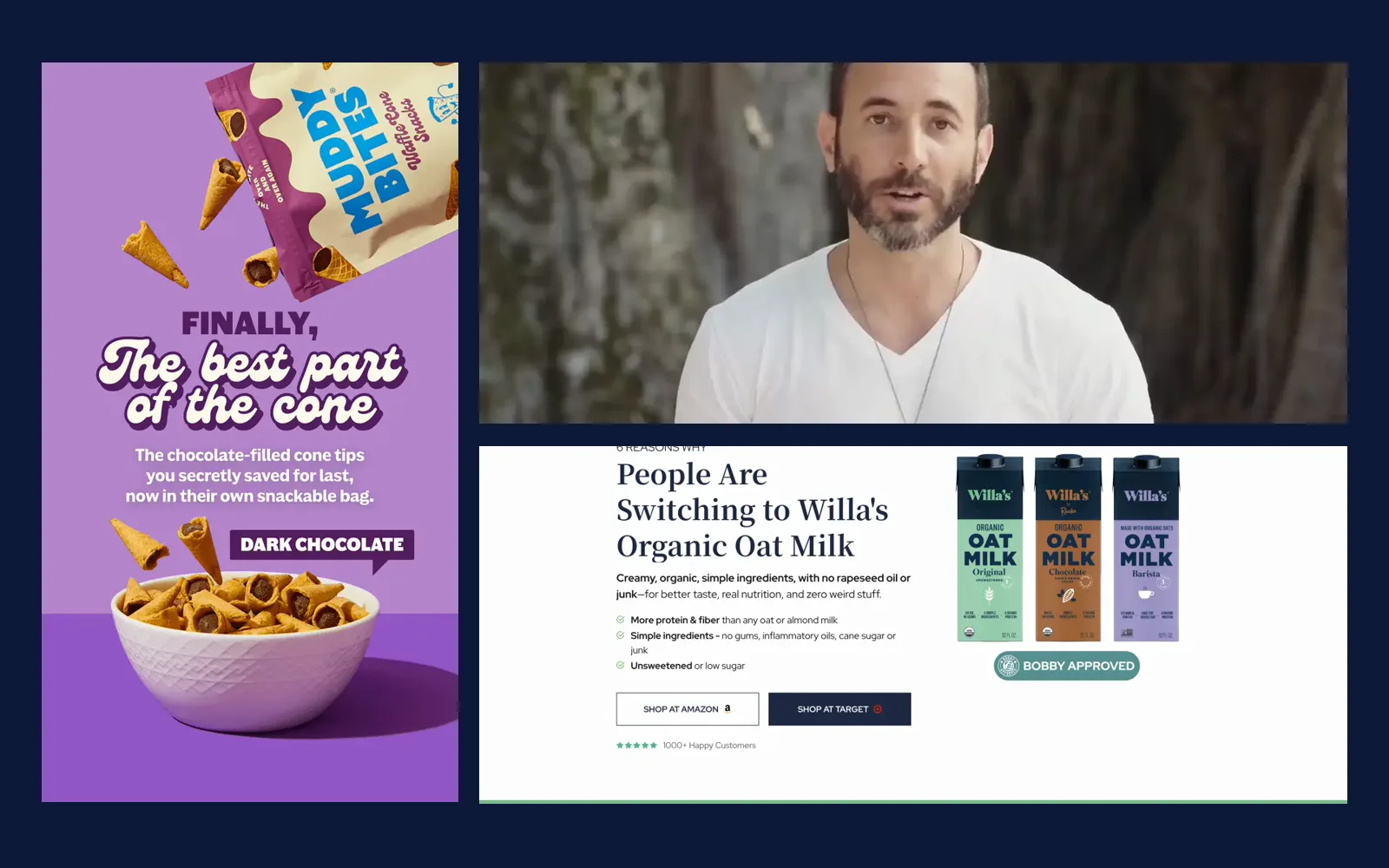
Paid Media Agency vs. Performance Marketing Agency: Which Model Does Your Brand Need?
One runs your ad accounts. The other answers for what those ads do to revenue and margin. Here is what each actually owns, what it costs, and a five-question test for which one you need.

The ad
Concept, creative, testing
- Budgets
- Bids
- Audiences
- Campaign structure
- Reporting
The media buy
Where and how the ad runs
The page
Landing page, offer, checkout
5 stores
over 2x their sales goal at Target for Willa's Oatmilk
The result
Customers, margin, retail sales
Paid media agency vs. performance marketing agency: the difference
A paid media agency is hired to run your ads well. A performance marketing agency is hired to make your ads produce customers and profit, so it takes on whatever stands in the way: creative, landing pages, offers and measurement.
The two labels overlap, and plenty of agencies use both. That is why the label is the wrong thing to compare. What matters is where an agency's job stops. If it stops at the ad account, every problem outside the account (ads that tire in three weeks, a page that does not convert, tracking nobody trusts) lands back on your team.
That is fine if your team is built for it. It is a slow, expensive loop if it is not.

What each model owns
Put proposals side by side on scope, not on the name at the top.
| Paid media agency | Performance marketing agency | |
|---|---|---|
| Judged on | Buying media well: reach, delivery, efficiency and spend pacing | Business results: new customers, acquisition cost, contribution margin |
| Monthly report leads with | Impressions, CPM, CPC and in-platform ROAS | Cost per new customer, revenue and margin against target |
| Owns | Campaign setup, budgets, bids, audiences, reporting | All of that, plus creative, landing pages, offers and measurement |
| Creative | Usually supplied by you or another vendor | Concepted, produced and tested in-house |
| Landing pages | Recommendations at most | Built and tested as part of the account |
| Measurement | Platform reporting and pixel setup | Tracking tied to orders, margin or retail sales |
| Typical fee | Retainer or a percentage of spend | Higher retainer, sometimes with a results-based element |
| Best when | Your team already ships the creative and owns the funnel | Growth depends on ads, pages and offers changing together |
Where a media buying agency fits
"Media buying agency," "paid ads agency," "paid social agency" and "paid media agency" mostly describe the same job: deciding where your budget goes and running the campaigns. The differences are channel coverage. A paid social agency sticks to Meta, TikTok, Pinterest and similar platforms. A paid media agency usually adds Google and other search or programmatic buys. A PPC agency focuses on paid search and shopping ads on Google and Microsoft. A traditional media buying agency may also buy TV, radio, podcast and out-of-home.
None of those labels tells you whether the agency will make the ads, fix the page or answer for profit. Ask.

"Performance" means two different things
When an agency calls itself a performance marketing agency, it can mean either of these. Find out which before you compare prices.
Judged on outcomes
The most common meaning. The agency is paid a retainer or a percentage of spend, and it reports on and answers for business results: customers, acquisition cost, revenue and margin. This is what most brands want.
Paid on outcomes
The fee is tied to results: a cost per lead, a cost per sale or a share of revenue. It sounds safer, but it only works when tracking is clean and the agency controls what drives the result. Otherwise it rewards cheap leads, discount-driven orders and spend on people who would have bought anyway.
How to tell which one is pitching you
Every agency says it cares about results. These four requests get past the label in the first meeting.
| Ask | A paid media agency usually says | A performance marketing agency usually says |
|---|---|---|
| Show me page one of a real client report | Spend, impressions, clicks and platform ROAS | New customers, cost per customer and margin against a target |
| Conversion rate drops. Who changes the page? | "We can flag it for your team" | "We test a new version" |
| Your best ad tires. Who has the next one? | "Send us new assets" | "It is already in the next test" |
| What would you tell a brand not to spend on? | Rarely says no to a budget | Pushes back on offers, margins or budgets too small to learn from |
You may not have to pick one
Plenty of brands land between the two models. Any of these setups can work, as long as one named person owns the number.
In-house creative, outside media buying
Works when your team ships new ads every week. The risk is a slow handoff: results reach the people making the ads late, or not at all.
Separate media and creative vendors
Lets you hire a specialist for each job. You, or someone on your team, then has to run the test plan and settle disputes over why an ad lost.
One agency offering both
Common, but the teams can still be split. Ask who runs your account day to day, and whether the people making the ads see the results every week.
What it looks like when one team owns the whole path
These results came from accounts where First Spark ran the media and also built the creative, pages and offers around it. More on our client results page.

450% ROAS while scaling paid social spend 5x
Komuso's account grew on creative, media and pages moving together. We scaled paid social spend five times over while holding a 450% ROAS across the account, and new landing pages lifted conversion rates by up to 160%.
Read the Komuso case study"First Spark is like a creative director meets CFO. They took over our creative production and media buying strategy and 10x'd our business in 2 years."

+327% online store sales
Muddy Bites had strong brand equity, an underused creative library and paid media measured on the wrong numbers. New statics, recut videos and awareness-led Meta campaigns drove a 908% rise in direct traffic and a 327% rise in online store sales.
Read the Muddy Bites case study
23% lower acquisition cost in 30 days
We consolidated Copper Moon's Meta and Google accounts and rebuilt the creative for different buyers. A retail redemption campaign then returned 2.5x on first purchase.
Read the Copper Moon case study
600% return on ad investment
EBOOST needed Meta ads to move product off retail shelves. Creative, offer and receipt-based tracking were built together so every in-store purchase could be counted.
Read the EBOOST case studyThe same campaign, measured two ways
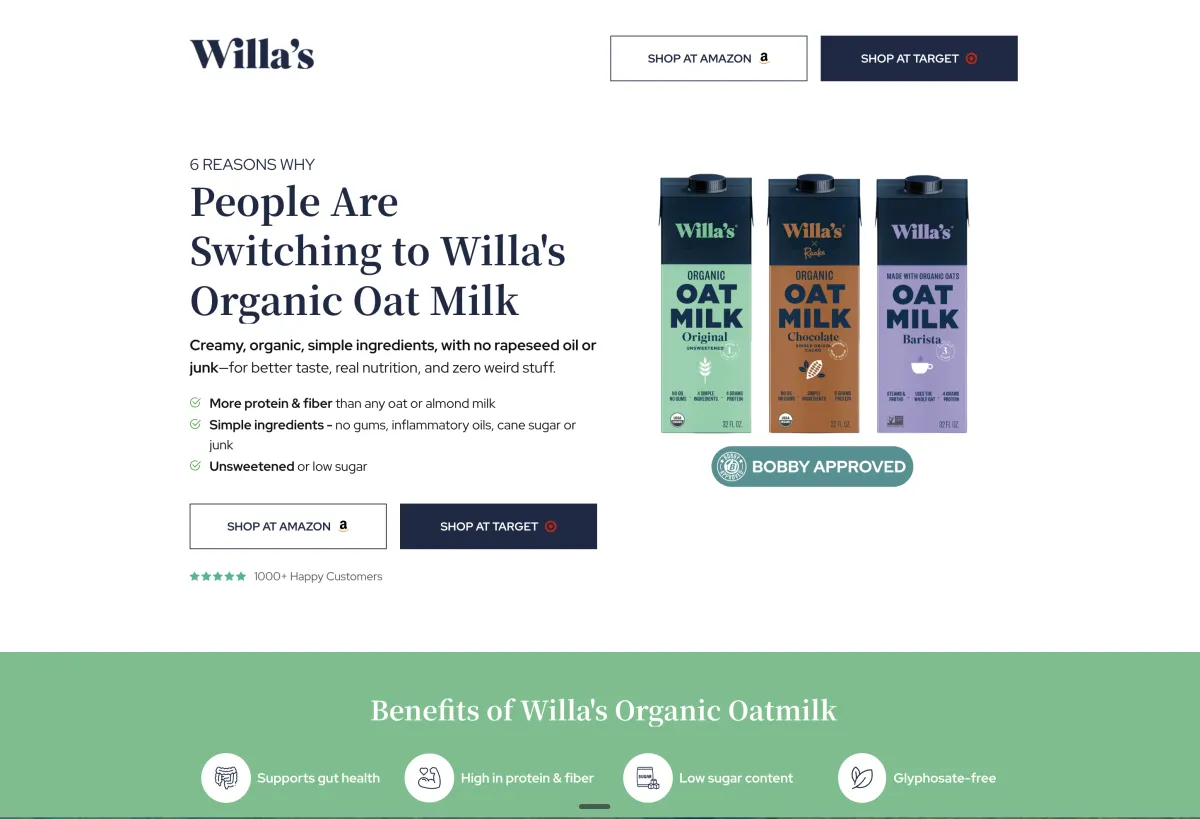
A delivery report on Willa's Target campaign would have shown impressions, clicks and cost per click around each store. None of that tells a retail buyer whether product moved. The number that mattered was units per store per week: 25 stores reached goal or better, and five ran at more than twice goal, at 10 to 15 units per store per week.

When a paid media agency is the right call
An integrated agency is not always better. A focused paid media agency, or a strong freelancer, is often the smarter buy when:
Hire a paid media agency when
- You have an in-house creative team shipping new ads every week.
- Your landing pages and offers already convert and someone owns them.
- Tracking is reliable and your team trusts the numbers.
- The gap is campaign management on a channel you are not running well yet.
- You want to keep strategy in-house and buy execution.
Hire a performance marketing agency when
- Winning ads wear out faster than anyone can replace them.
- Spend goes up and acquisition cost goes up with it.
- Platform ROAS looks fine but the business is not making more money.
- Three vendors each blame another for the same result.
- You sell across your site, Amazon and retail and need ads that move all of them.
Weighing one specialist against a team? See Meta ads agency vs. freelancer. Thinking about hiring instead? See agency vs. in-house team.
Five questions that tell you which one you need
- Who makes your ads today, and how many new concepts ship each month? If the answer is "not enough," a media buyer cannot fix it.
- When your best ad stops working, what happens next? If nothing is ready to replace it, creative is your constraint.
- Does anyone own the landing page and the offer? If the page belongs to no one, the media buyer is optimizing traffic into a leak.
- Which number would you fire an agency over? If it is profit or new customers rather than ROAS, you need an agency that owns what drives it.
- How many vendors touch one customer before they buy? Two or more usually means slow fixes and arguments over credit.
Mostly "we have it covered"? A paid media agency will do. Mostly gaps? Look for a performance team, and use our questions to ask a marketing agency to test whether it really owns those gaps.

What the first 90 days should look like
The details differ for every brand, but the order of work should not. Be wary of anyone promising to scale in month one. This is how we run it at First Spark.
Starting from scratch
- Month 1: build. Tracking, offers, pages and the first ads.
- Month 2: learn. Find which messages and audiences respond.
- Month 3: scale. Put budget behind what works.
An existing account
- Month 1: stabilize. Fix what is leaking before adding spend.
- Month 2: test. Run new concepts against what already works.
- Month 3: scale. Put budget behind the winners.
What to measure, whichever you hire
Ad platforms count conversions by their own rules and often claim credit for sales that would have happened anyway, so platform ROAS can rise while the business makes no more money. Hold either model to numbers outside the ad account: cost per new customer against what you can afford to pay, and contribution margin after ad spend. For retail sales, use redemptions or units per store.
How each is priced
Paid media agencies usually charge a monthly retainer or a percentage of ad spend with a minimum fee. A November 2026 comparison of five agencies' published fees ran from $750 a month flat for small budgets to $14,000 a month for paid media management, and $26,000 for full demand and media services. Percentage models of 12 to 15 percent of spend with a floor were common (Christoph Olivier, 2026).
Performance marketing agencies cost more because they staff more: creative strategists, designers, editors, landing page builders and analysts. Compare the total cost of the whole path, including whatever you would still pay others for creative, pages and tracking under a paid media setup.
More detail in our ecommerce marketing agency pricing guide and Meta ads management pricing.

Is First Spark the right fit?
First Spark is a performance marketing agency for D2C, CPG and SaaS brands. One team runs the media, makes the ads, builds the pages and answers for contribution margin. See how that works for creative on our performance creative agency guide, for retail brands on our CPG marketing agency page, and how we compare with others in the best DTC performance marketing agencies. If Meta is your main channel, see our Meta ads management service.
We are not the right fit if you only need campaign management on top of creative and pages your team already owns, or if you want the lowest monthly fee. A paid media specialist will serve you better there.
Questions buyers ask
What is the difference between a paid media agency and a performance marketing agency?
A paid media agency buys and manages your ads: budgets, bids, audiences, campaign structure and reporting. A performance marketing agency is judged on a business outcome such as new customers or profitable revenue, so it usually also owns the things that decide that outcome: the ad creative, the landing page, measurement and the offer. Many agencies use both labels, so ask what they own rather than what they are called.
Is performance marketing the same as paid media?
No, though they overlap. Paid media describes the channels you pay for, such as Meta, Google and TikTok ads. Performance marketing describes how the work is judged: on measurable outcomes like new customers, cost per customer and revenue. Most performance marketing runs on paid media, but plenty of paid media, such as brand awareness campaigns, is not run as performance marketing.
What does a paid media agency do?
A paid media agency plans your ad budget and runs your campaigns: choosing channels, setting budgets and bids, building audiences and campaign structure, and reporting on results. Creative, landing pages and offers usually stay with your team or another vendor.
Can one agency do both?
Yes, and many do, sometimes as separate teams under one roof. Ask who will run your account day to day, what their monthly report leads with, and whether the people making your ads see the results each week.
Which is cheaper, a paid media agency or a performance marketing agency?
A paid media agency usually has the lower fee because it does less of the work. The fairer comparison is total cost, including what you still pay others for creative, landing pages and tracking, and what each new customer ends up costing.
What is an example of performance marketing?
Willa's Oatmilk ran geo-targeted Meta ads around its weakest Target stores and judged them on units per store per week rather than clicks. Twenty-five stores reached goal or better, and five ran at more than twice goal.
What is paid media?
Paid media is any advertising you pay a platform to show: Meta and TikTok ads, Google search and shopping ads, YouTube, programmatic display, retail media and sponsored placements. It is one of three media types, alongside owned media (your site, email and social accounts) and earned media (press, reviews and word of mouth).
Is a media buying agency the same as a paid media agency?
Mostly. A media buying agency plans and buys ad placements. Online, that means managing campaigns on Meta, Google, TikTok and similar platforms, which is what most paid media agencies do. Some media buying agencies also buy TV, radio, podcast or out-of-home placements, which a paid social agency would not.
Is a performance marketing agency paid on results?
Sometimes, but not usually. Most performance marketing agencies are judged on results and paid a retainer, a percentage of ad spend, or a mix. A smaller group ties fees to results such as a cost per lead or a share of revenue. Pay-for-performance can work when tracking is clean and the agency controls what drives the result. Otherwise it pushes the agency toward cheap leads or easy, low-margin sales.
How much does a paid media agency cost?
A November 2026 comparison of five agencies' published fees ranged from $750 a month flat for small budgets to $14,000 a month for paid media management and $26,000 for full demand and media services. Percentage models of around 12 to 15 percent of spend with a minimum fee are common. Integrated performance agencies cost more because they also staff creative, landing pages and analytics.
When is a paid media agency enough?
When your team already produces strong creative on a steady schedule, owns the landing pages and has reliable tracking, and the gap is campaign management. A good paid media agency or a senior freelancer will often get more from the account for less money than an integrated agency in that situation.
Should a D2C or CPG brand hire a performance marketing agency?
Usually, once growth depends on several things moving together: new creative every month, landing pages and offers that hold margin, and measurement that ties ads to profit or retail sales. If one vendor buys the media and others make the ads and pages, results tend to get argued about instead of fixed.
Find out what your growth actually needs
Book your Velocity Blueprint: a 45-minute working session for D2C, CPG and SaaS brands. No obligation. You leave with:
- Your allowable CPA: the most you can pay for a customer and still make money.
- An offer that holds margin, built so the first order pays for itself.
- A creative velocity forecast: how many new ads your revenue goal needs each month.